Scaling Revenue Through Self-Serve Quoting
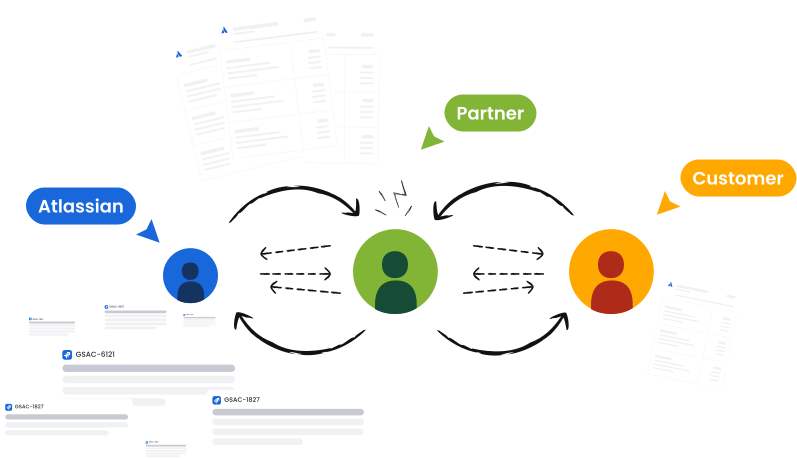
Partners are critical to Atlassian’s Growth
Solution Partners drive nearly half of Atlassian's revenue, with deals 21× larger than direct customers. But for years, partners couldn't run their business at their own pace. Every quote depended on Atlassian.

My Role
I led the design of the self-serve quoting experience within the Partner Purchasing Centre as the sole designer on this surface. Working within a predefined roadmap, I translated complex billing and system constraints into a scalable experience. Using partner insights gathered through interviews and office hours, I translated real-world needs into a clear quoting model, shaping decisions across interaction patterns, pricing transparency, and system behaviour.
The Opportunity
Every Cloud quote required an Atlassian Advocate to build it. Partners had no way to configure, price, or amend on their own, which made them slower to respond, less competitive in front of prospects, and increasingly frustrating for the customers they were trying to serve.
The opportunity was clear: give partners the tools to configure, manage, and submit quotes entirely on their own, without needing to involve Atlassian at any step.
Outcome & Impact
The self-serve quoting system launched in Q1 2024 and immediately showed strong adoption signals and measurable efficiency gains across the partner network.
Self-serve quoting proves the model works: partners move faster and convert better. The next phase is to close product coverage gaps, reduce errors and friction, and scale adoption so it becomes the default engine for partner revenue.
Design Process
This walkthrough follows my process for Transparent Pricing Logic, Interaction 3. Some artefacts shown are drawn from other projects, for confidentiality reasons, though the process itself stays consistent regardless of project. The exact steps can also shift with the project, more complex initiatives, for example, might add a conceptual model mapping stage before hypotheses. Select any step to see the detail behind it.
Operational Scalability Through Interaction Design
Each interaction was designed to remove a specific blocker from the partner workflow, enabling faster, more accurate quoting without internal dependencies.
Interaction 01
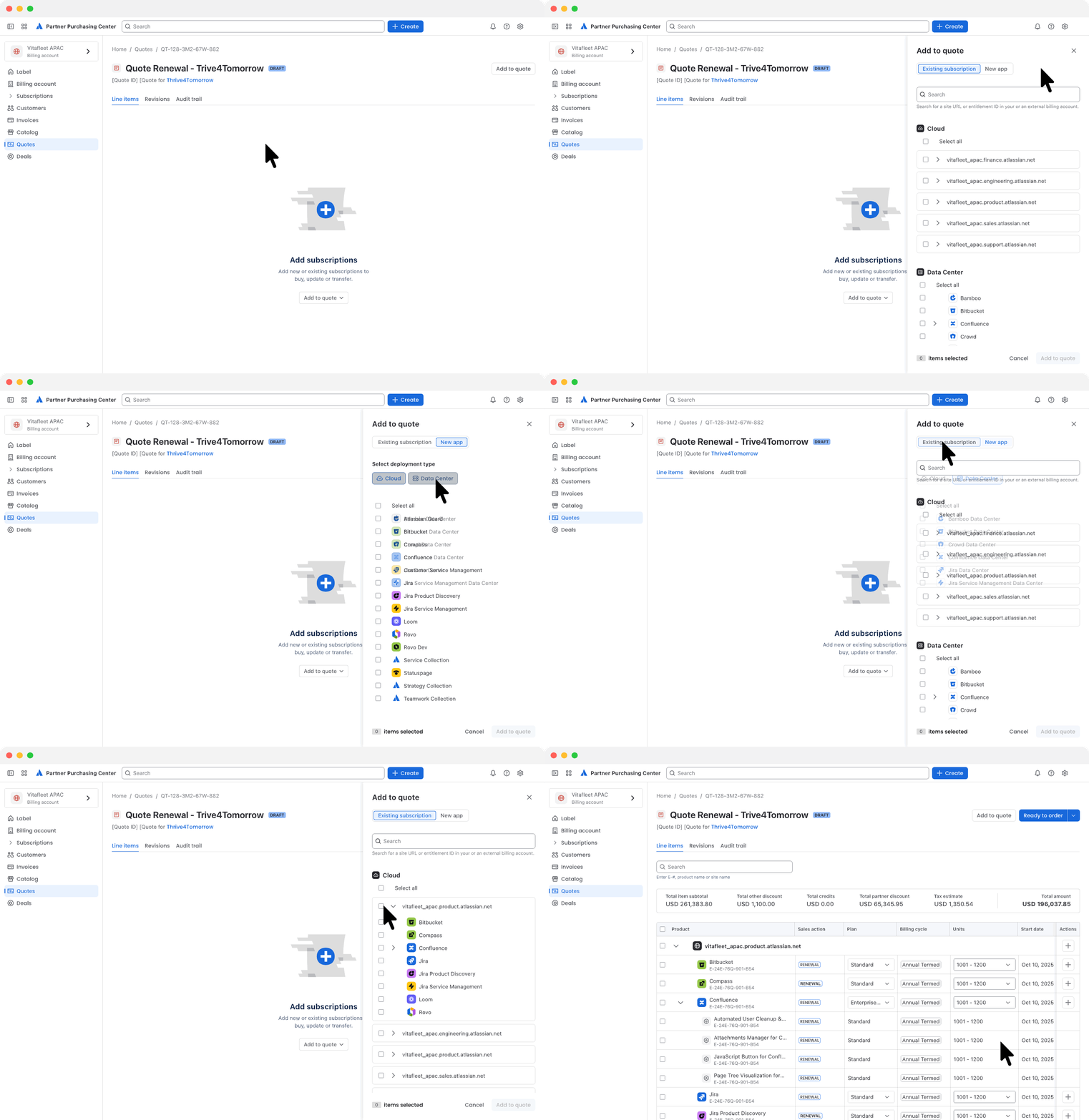
One Flow to Add Any Subscription
Partners can add existing subscriptions, new products, and transfer from external account, in one quote. Each scenario operates across multiple object layers and distinct system logic, but the experience brings them together into a single, coherent flow that hides complexity and keeps partners moving.
Challenge: Three fundamentally different operations: add existing, add new, and transfer. Each backed by different systems and rules.
Decision: Expose one intent-driven entry point, not three flows. Let the system adapt to the user, not the other way around.
Trade-off: Less upfront transparency, more reliance on progressive disclosure and guardrails.
Impact: Reduced cognitive load, faster task completion, fewer dead ends, and a flow that scales to complex scenarios and bulk operations.
Interaction 02
Edit in Place, See the Impact
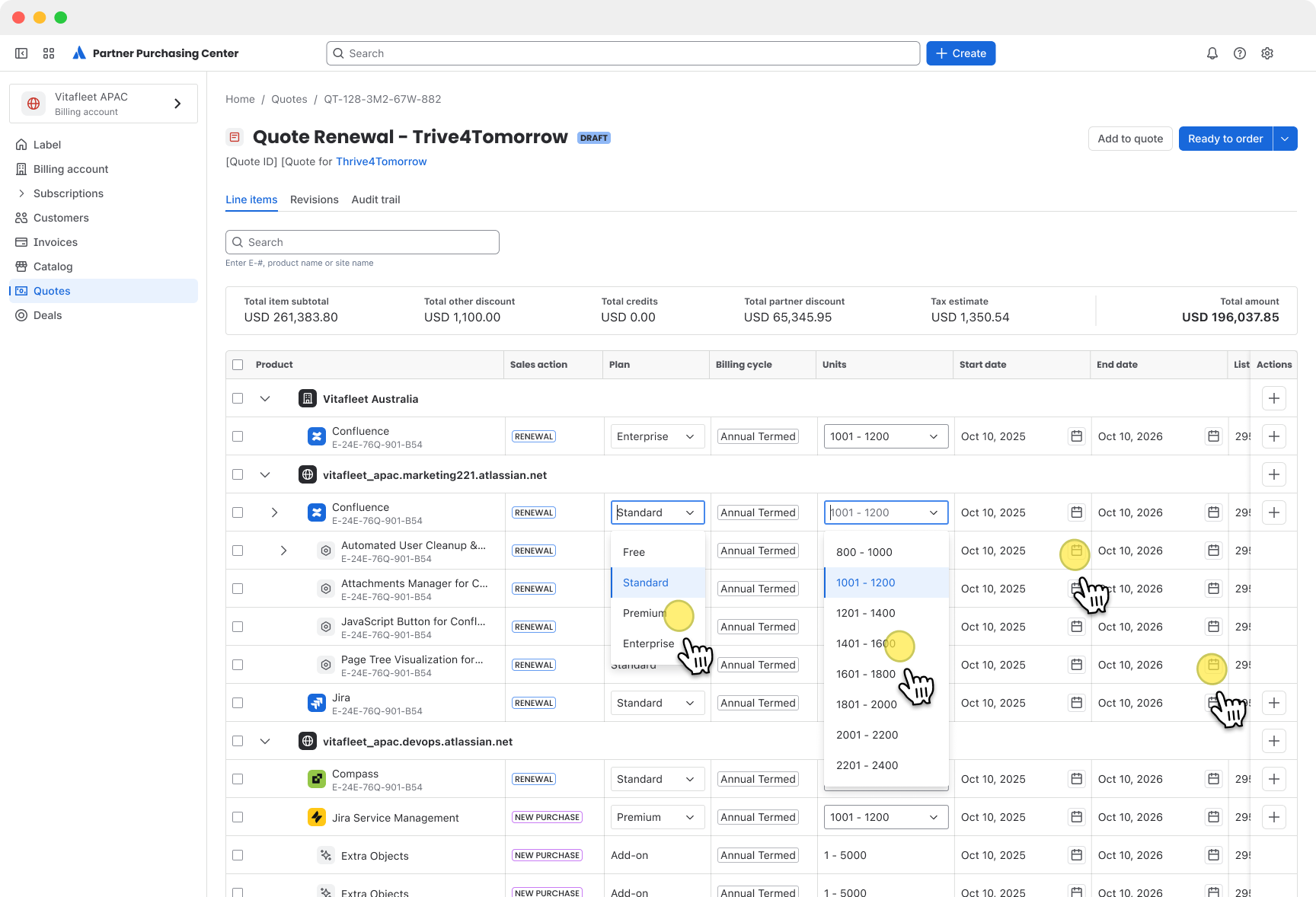
A quote acts as both a summary and an editable workspace. Partners can review everything at a glance and edit any line in place, even as each line carries its own product, plan, tier, user count, and pricing with different valid options per product.
Challenge: Configuring subscriptions across tiers, billing cycles, and term lengths, each with financial impact, multiplied in complexity across product types with distinct pricing rules.
Decision: Inline editing with key parameters surfaced in a scannable layout, sensible defaults to guide input, and an explicit refresh to retrieve updated pricing without breaking flow.
Trade-off: Prioritised speed and density over real-time pricing feedback and full accessibility coverage at launch.
Impact: Faster, more reliable configuration with fewer errors, clearer financial visibility, and a pattern that scales across products without redesign.
Interaction 03
Transparent Pricing Logic
Margin results from layered discounts across products and time, often spanning multi-year terms with different billing schedules and proration rules. In the previous experience, Partners struggled to reconcile the numbers, eroding trust and driving support tickets.
Challenge: Design a margin explanation that supports both quick validation and detailed breakdowns, making pricing transparent and defensible without slowing quoting down.
Decision: A progressive calculation model that reveals how values build, breaking margin into clear, connected steps from line-item contributions to final result, turning the number into a readable narrative.
Trade-off: Accurate margins depend on post-approval billing data, making full precision impossible during quoting. We surfaced estimates with clear expectations, prioritising decision-making over exactness.
Impact: Partners can understand and validate margin as they build quotes, leading to better decisions, fewer surprises, and increased trust in the pricing model.
Interaction 04
Bulk Actions, Built for Speed
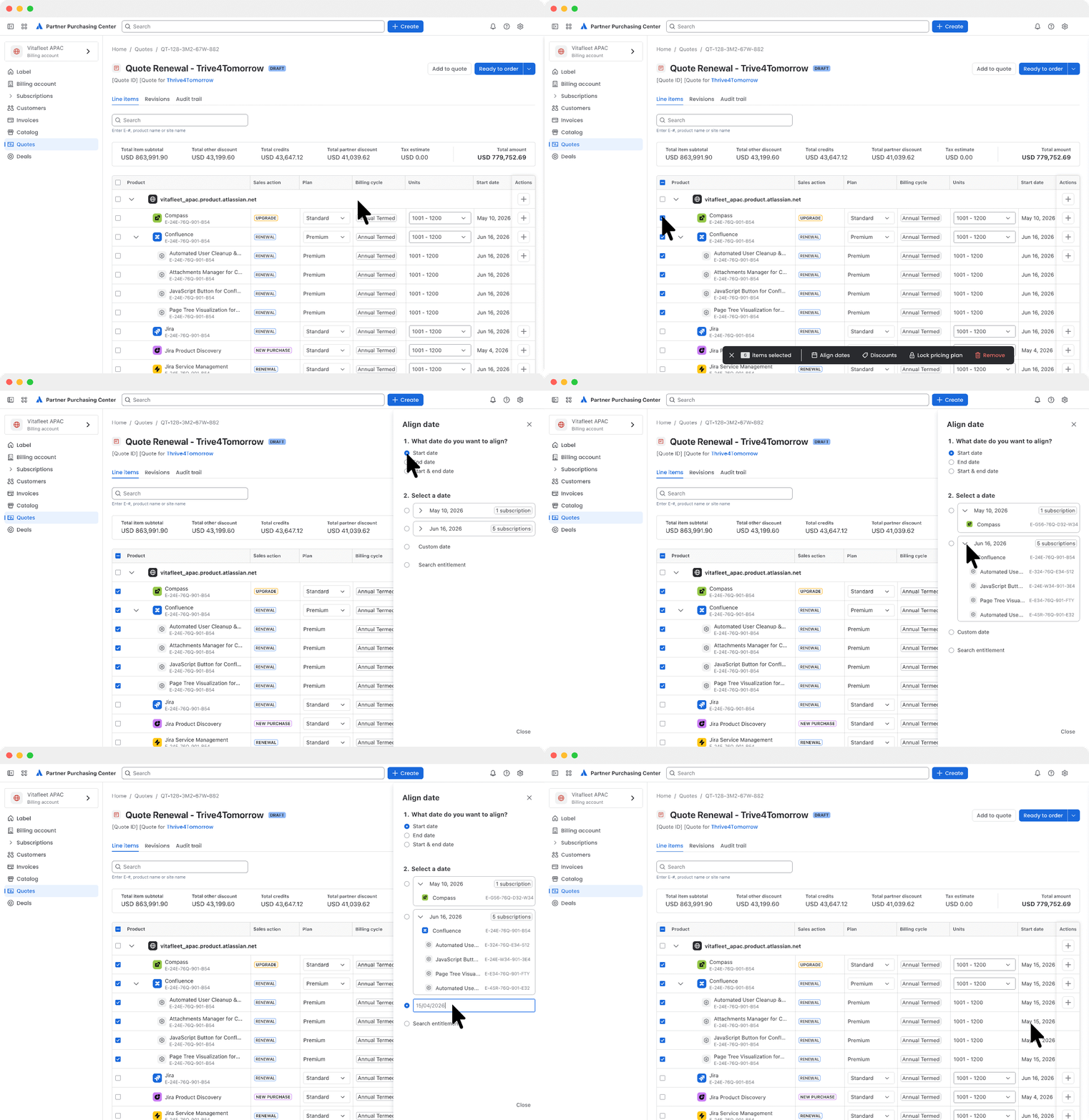
Bulk actions sound simple but break quickly in a system with dependencies, constraints, and eligibility rules. Some subscriptions can be updated together, others cannot.
Challenge: Bulk actions needed to feel fast and reliable, while valid operations constantly change based on selection, making it unclear what is included, excluded, and why, and increasing error risk.
Decision: I designed a context-aware bulk action model that surfaces only valid actions and makes constraints explicit, so partners can clearly understand what will happen before they act.
Trade-off: A non-obstructive pattern would have preserved context, but we adopted an ADS overlay to maintain consistency across partner tools, accepting a more interruptive interaction while keeping actions and their impact clear and predictable.
Impact: Faster bulk operations with fewer errors, enabling partners to confidently manage complex quotes at scale.
Interaction 05
Clear Errors, Fast Recovery
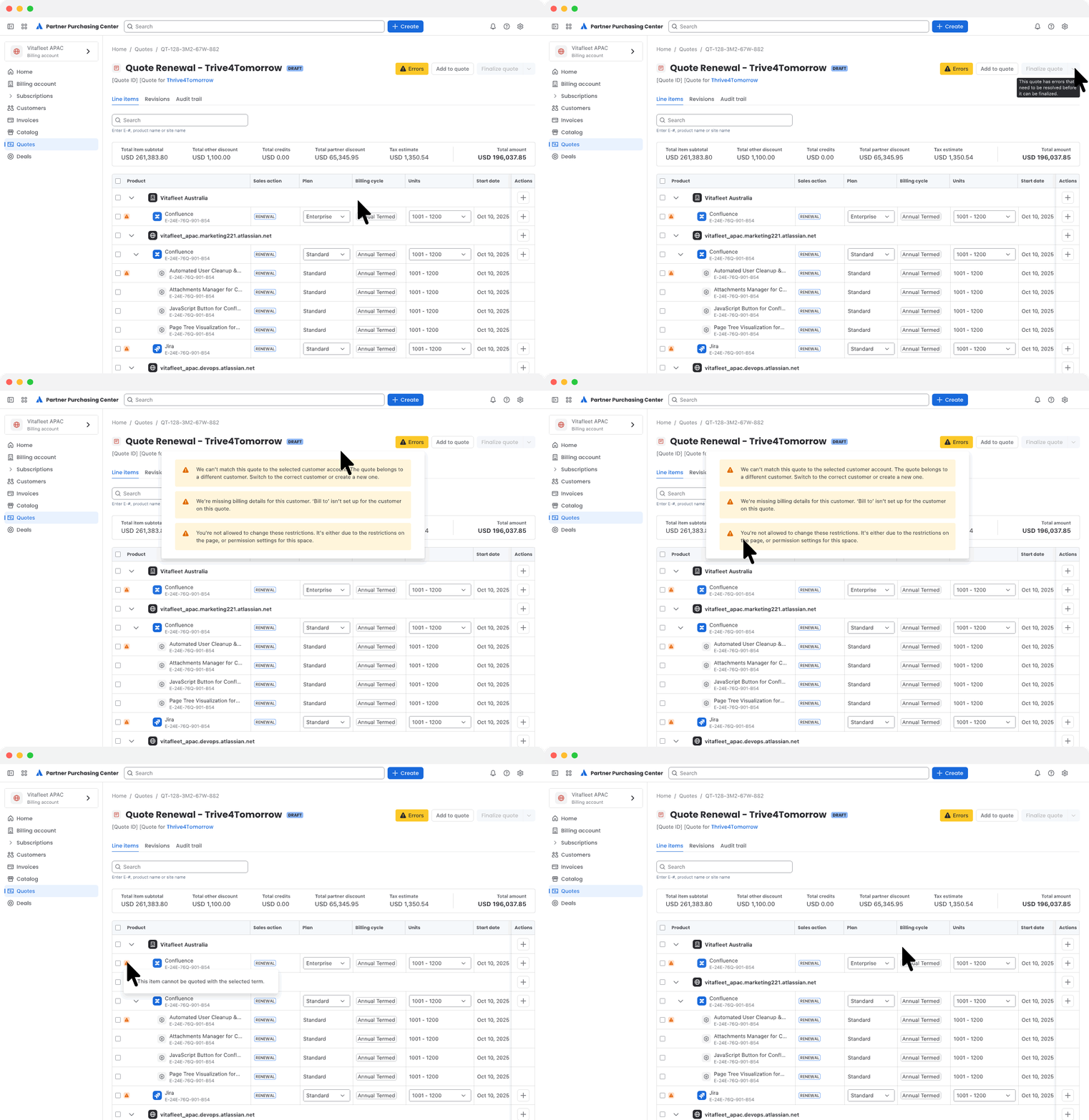
Partners invest significant time building quotes across many subscriptions and Stripe-driven constraints. In a system with this level of complexity, errors will happen as partners build quotes.
Challenge: Errors appeared at different levels with generic messages that lacked context. Partners often couldn’t understand what went wrong, what was affected, or how to fix it, which interrupted their flow and led to unnecessary escalation.
Decision: I designed a contextual error experience that highlights issues where they occur and explains them in clear, actionable terms, so partners can fix problems without losing their progress or leaving the quote.
Trade-off: Some limitations, particularly from Stripe, meant we couldn’t always provide full detail. In those cases, we chose to be clear about next steps and escalate when needed, rather than give incomplete or misleading guidance.
Impact: Fewer interruptions, more issues resolved within the flow, and a more reliable experience that keeps partners moving.
Beyond Self-Serve Quoting
This showcase intentionally focuses on the signals, systems thinking, and interaction patterns behind the experience.
The deeper story includes operational trade-offs, adoption behaviours, technical constraints, and the broader platform strategy that extended beyond self-serve quoting.