Accelerating Partner Growth Through Progress Visibility
90 seconds to understand the concept of 'Tiers'
Partners don't progress by accident. I designed a self-service experience that transformed fragmented programme requirements into a clear, actionable path, helping partners understand where they stood, what to do next, and when they were at risk. By connecting partner effort to visible outcomes, the experience turned progression into a driver of long-term partner growth.

My Role
I led the end-to-end design of the Tier Progress Tracker within Partner Central, working closely with a Technical Program Manager, Lead Engineer, Channel Business Analyst, and Partner Program stakeholders.
Beyond designing the experience, I facilitated cross-functional alignment around the problem space, helped define the MVP scope, prioritised key interactions, and translated fragmented programme requirements into a clear, self-service experience.
The Opportunity
Partners had no reliable way to understand their tier position. Accreditation status, revenue tracking, and task completion lived across four separate internal systems, none of which were surfaced to partners directly. The only way to get a clear picture was to contact Atlassian support and wait.
This created a compounding problem: partners who didn't know where they stood couldn't take action, partners who were close to a deadline had no warning, and partners who were falling behind couldn't course-correct. The longer the gap, the more likely they were to disengage from the programme entirely.
The opportunity was not simply to consolidate data, but to give partners confidence to plan their progression independently by making requirements visible, actionable, and easy to understand.
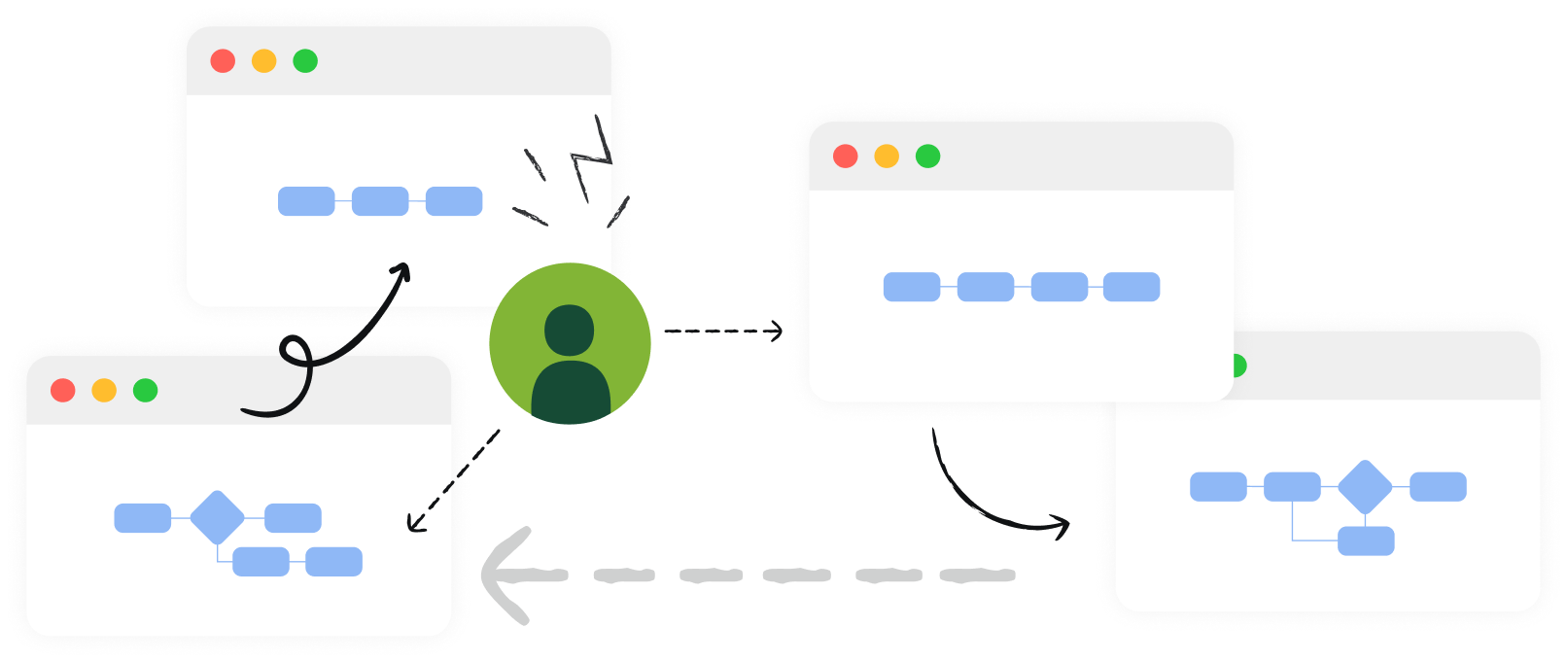
Solution: Making Program Requirements Actionable
Each interaction was designed to close a specific visibility gap in the partner experience, making tier progression legible, actionable, and self-serve at every stage.
Interaction 01
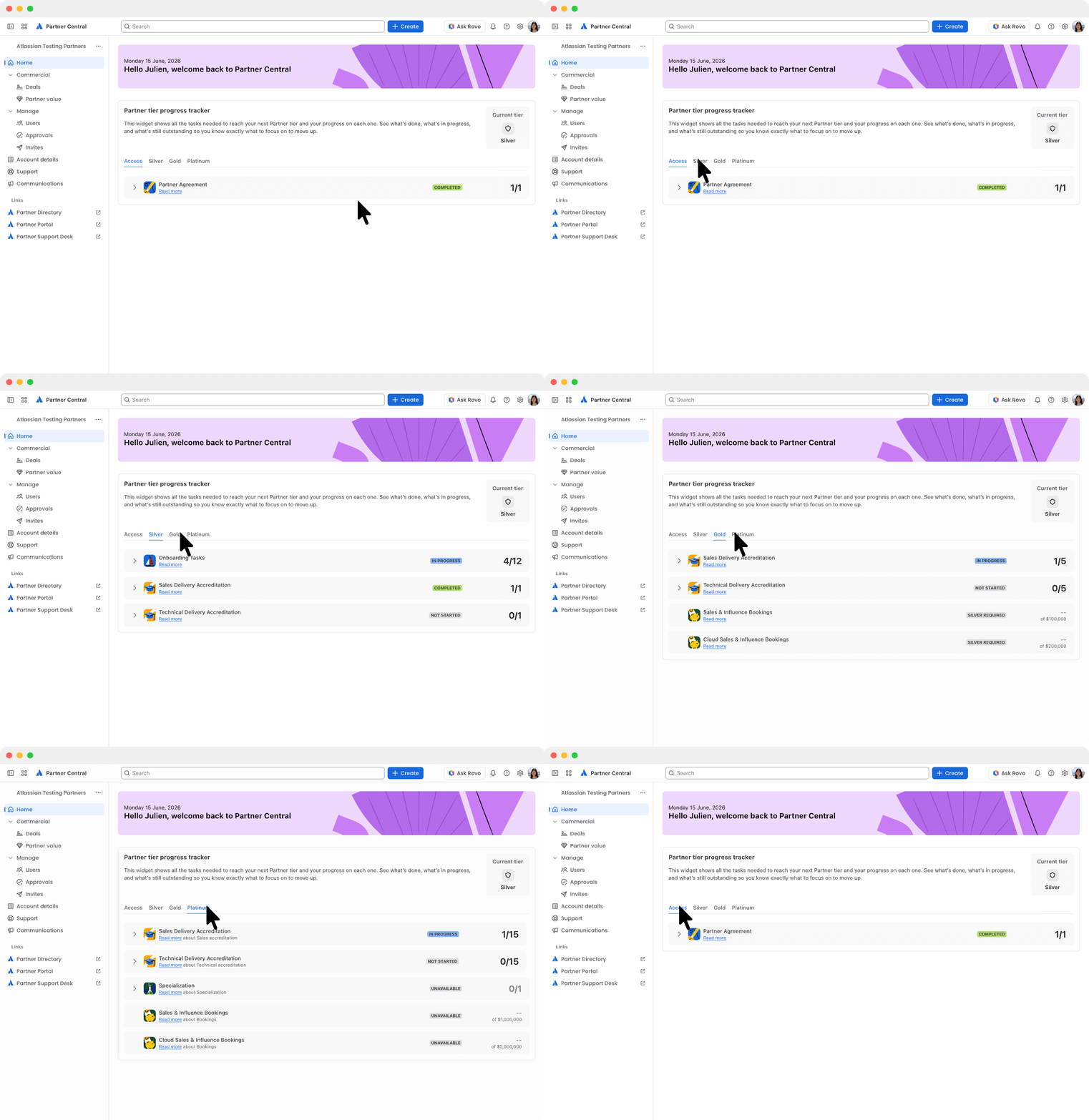
Turning Tier Progression Into an Executable Plan
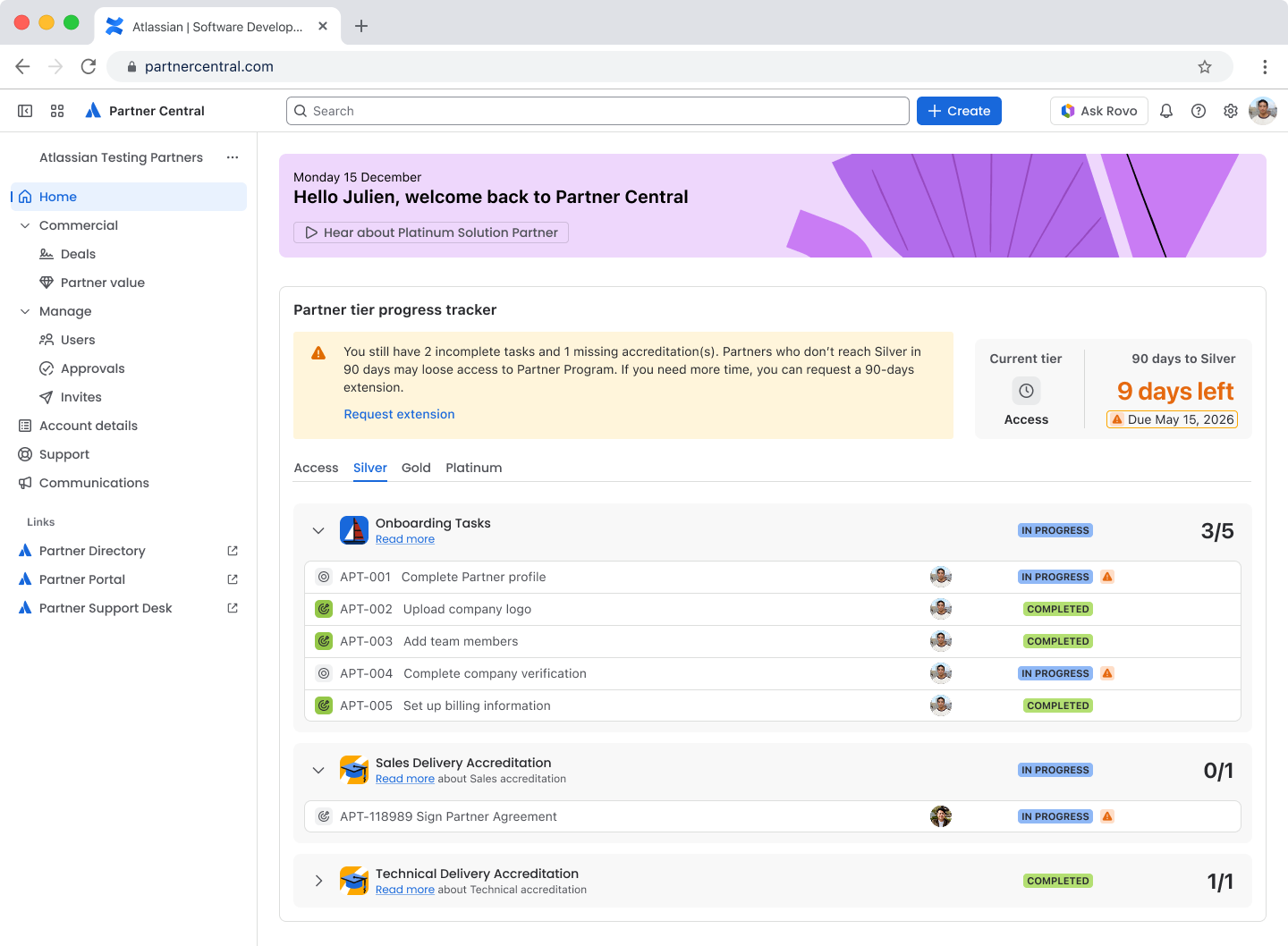
Tier progression was previously abstract and hard to reason about. The stepper makes it visible, showing where partners are today and what it takes to reach the next tier.
Challenge: Tier progression spans multiple systems and roles, leaving partners with a fragmented view of requirements and no clear way to track what’s done or what’s next, creating friction in execution.
Decision: I designed a unified progress model that consolidates requirements into a single, structured view, with clear task status and ownership to help partners track and act on progression.
Trade-off: The experience focuses on execution rather than strategy, surfacing what needs to be done without helping partners decide whether or how to pursue the next tier.
Impact: Designed to improve execution confidence by reducing “what's left?” confusion, supporting a reduction in support queries, and helping partners complete progression more reliably.
Interaction 02
Turning That Plan Into Clear Next Actions
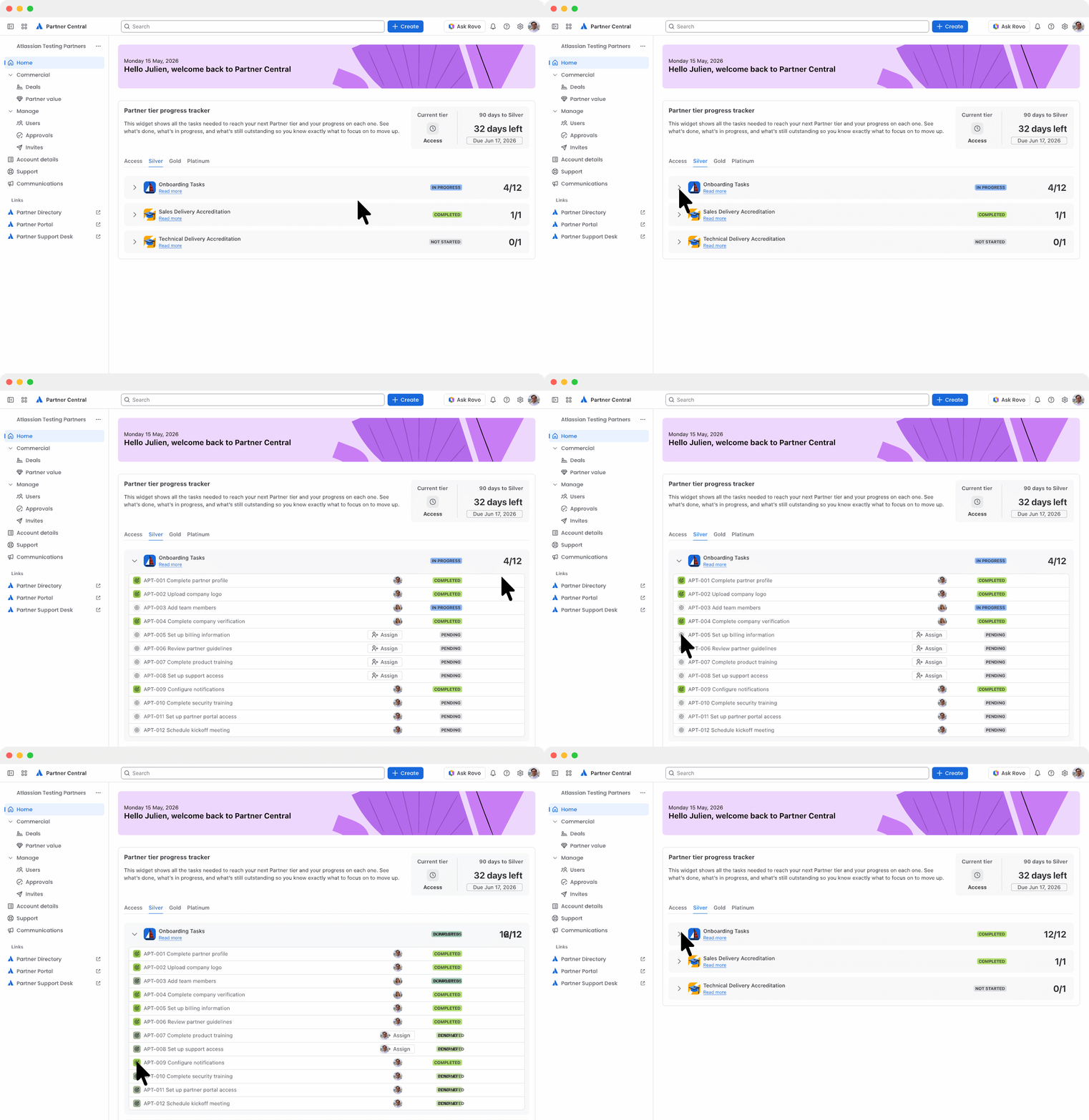
This feature lists all program tasks, accreditations, certifications, onboarding steps, and booking milestones, with completion status and progress indicators.
Today, partners must navigate multiple disconnected systems to manually piece together their progress.
Challenge: Tier progression involves dozens of tasks across domains, each with status and ownership. The risk wasn’t lack of data, but how to present it without overwhelming users or breaking as complexity grows.
Decision: I chose a structured, text-driven model over charts and progress bars, using clear grouping, simple summaries, and consistent status indicators to keep the experience scannable and scalable.
Trade-off: Without system integrations, task status had to be manually maintained. We accepted this to ship early, designing the model to support future automation without rework.
Impact: Intended to provide a clear, scalable view of progression that helps reduce cognitive load, supports team coordination, and adapts as program complexity grows.
Interaction 03
Enabling Coordinated Execution Across Partner Teams
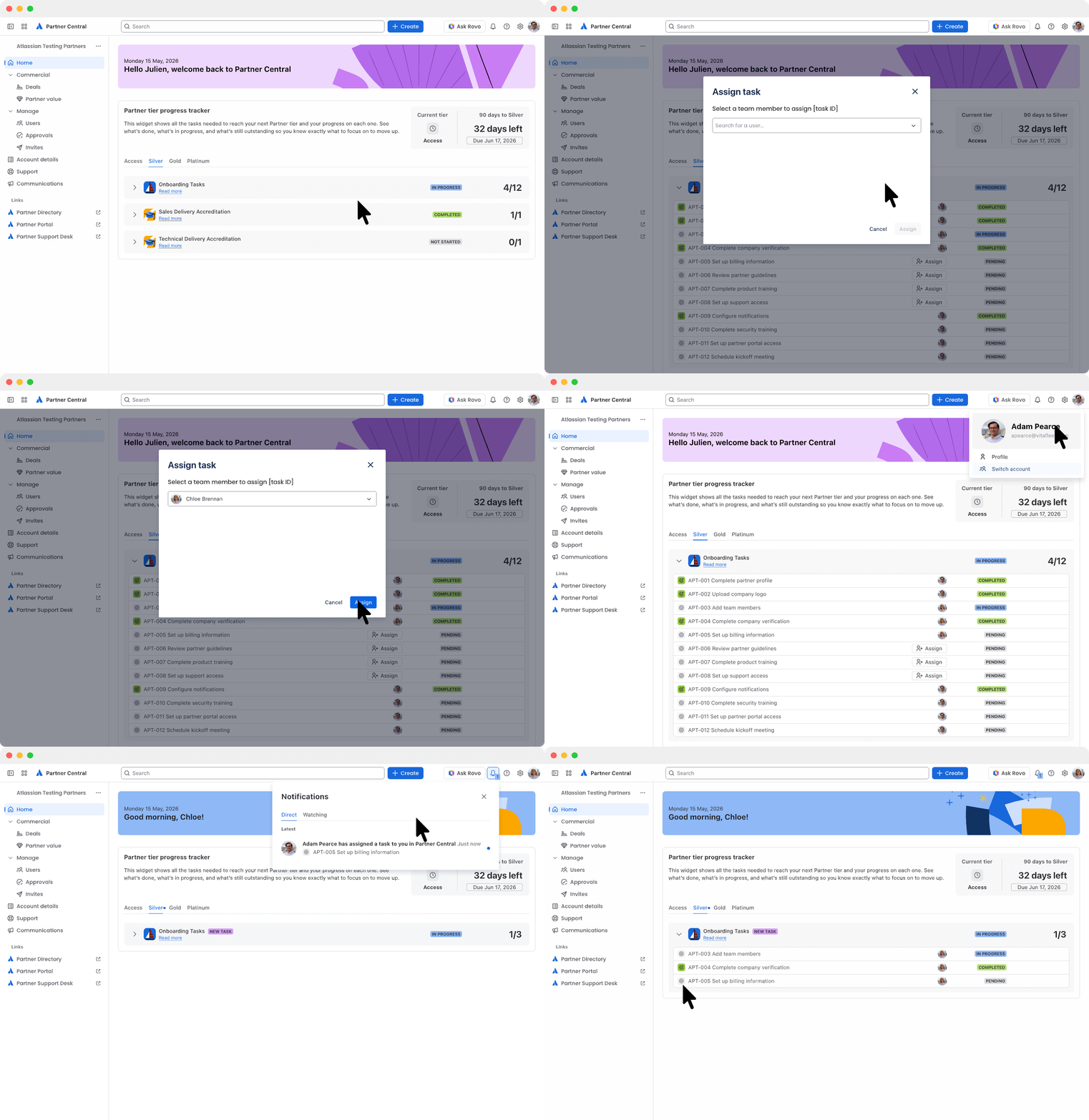
Tier progression is a team effort, but previously unmanaged. The widget introduces lightweight task delegation, making ownership, status, and workload visible across the team.
Challenge: Tier progression requires tasks to be completed across multiple roles, but no single owner is responsible for all of them. Coordination happened outside the system, leading to dropped tasks and unclear ownership.
Decision: I introduced a lightweight assignment model within the progress view, allowing principals to delegate tasks while making ownership and status visible to the team.
Trade-off: We avoided building a full workflow system, keeping coordination intentionally lightweight without approvals or automation, accepting the risk of stalled tasks.
Impact: Designed to support coordinated team effort by making ownership and progress visible, helping to reduce dropped tasks and improve completion reliability.
Interaction 04
Making Risk Visible Before It’s Too Late
Partners often discovered gaps too late, after the assessment window had closed. The widget introduces time-based signals and contextual alerts that surface when progress is off track, using clear status indicators and deadline-aware messaging to highlight urgency.
Challenge: The Access to Silver transition is a time-boxed, high-stakes moment where partners must complete multiple tasks across teams without early rewards. Progress was fragmented, coordination weak, and risks largely invisible until it was too late.
Decision: I introduced deadline-aware signals that surface approaching risk, connected to task visibility and ownership, making it clear what’s outstanding and who is responsible.
Trade-off: We balanced urgency with trust, avoiding alarmist patterns while ensuring deadlines and risks could not be ignored.
Impact: Intended to improve visibility into risk and progress, helping partners act before deadlines are missed and expected to reduce silent drop-off during the assessment window.
Although implementation was paused as priorities shifted, the work established interaction patterns and experience principles that informed subsequent strategic discussions.
Beyond This Summary
This page is intentionally a condensed version of the project. The complete story includes the product strategy, cross-functional collaboration, hypothesis-driven design process, AI-assisted exploration, and key trade-offs that shaped the final experience.
During interviews, I walk through the full decision-making process, explaining not only what was designed, but why those decisions were made and how they supported Atlassian's broader business goals.